Common Eye Conditions
Understanding the challenges your eyes might face and how to manage them.
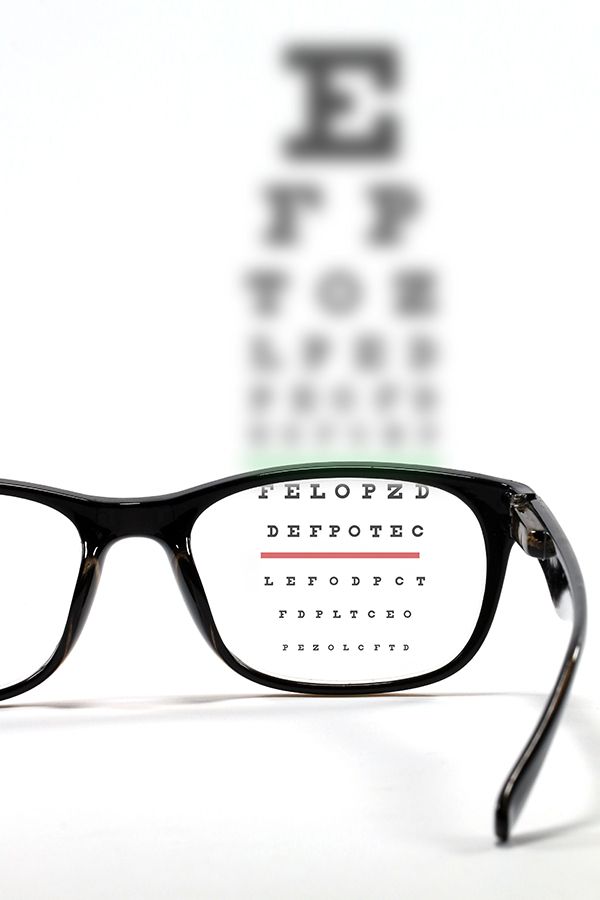
Myopia (Nearsightedness)
Difficulty seeing distant objects clearly, while close-up vision remains sharp. Caused by an elongated eyeball or overly curved cornea.
Symptoms:
- Blurry distant vision
- Squinting, eye strain
- Headaches
Management:
Corrected with concave lenses (glasses/contacts) or refractive surgery like LASIK to reshape the cornea.
Hyperopia (Farsightedness)
Distant objects are clearer, but focusing on near tasks causes blurriness. Occurs when the eyeball is too short or the cornea is too flat.
Symptoms:
- Blurry near vision
- Aching eyes or burning
- Focusing difficulties
Management:
Corrected with convex lenses that help light focus properly on the retina. Surgery is also an option for adults.
Astigmatism
Distorted or blurred vision at all distances due to an irregularly shaped cornea or lens (shaped more like a football than a basketball).
Symptoms:
- Distorted/blurry vision
- Poor night vision
- Headaches & fatigue
Management:
Corrected with cylindrical lenses in glasses or specialized "toric" contact lenses. Reshaping surgery is often effective.
Cataracts
A clouding of the natural lens, progressively blocking light. It's the leading cause of blindness worldwide, often related to aging.
Symptoms:
- Foggy/blurry vision
- Sensitivity to glare
- Fading color perception
Management:
Standard treatment is surgical replacement of the clouded lens with a clear artificial intraocular lens (IOL).
Glaucoma
Damages the optic nerve, often due to high internal eye pressure. Known as the "silent thief of sight" because it has few early symptoms.
Symptoms:
- Loss of peripheral vision
- Seeing halos around lights
- Severe eye pain (acute)
Management:
Cannot be reversed, but progression can be slowed with medicated eye drops, laser therapy, or microsurgery.
Macular Degeneration
Affects the macula (center of the retina), leading to loss of sharp, central vision. It is a major cause of vision loss in older adults.
Symptoms:
- Blurry central vision
- Straight lines look wavy
- Blind spots in center
Management:
Managed with nutritional supplements (AREDS2), specialized injections for the "wet" form, or laser therapy.